9+ curated guides • Updated February 2025
When a star passes, the headlines focus on the end. But the real story is in the passion that burned brightly until the very last moment. This week, we look beyond the obituaries to honor the final, vibrant work of the artists and icons we lost. To understand a legacy is not merely to recount a life's highlights, but to appreciate the final, fervent brushstrokes. This week, we mourn the passing of stage titan Eleonora Vance, pioneering musician Kai "Synthwave" Tanaka, and celebrated novelist Marcus Thorne. Instead of cataloging their awards, we turn our attention to the work they left on the easel—the last interview, the final demo, the impromptu social media post—that offers the most intimate glimpse into the artists they were, right up until the curtain fell.
For 15 years, I've sat on the other side of the 'we buy gold' sign, watching people make the same mistakes. They think the secret to a high payout is aggressive negotiation, but the truth is, we have a mental checklist for the 'perfect seller'—and those clients consistently walk away with more cash, with less hassle. Let me show you how to be one of them. Most people walk in treating the process like a confrontation at a flea market, a battle of wits where the loudest person wins. They're wrong. For us, it's about risk assessment and efficiency. The sellers who understand this don't just get a better price; they get our respect, and respect in this business translates directly into dollars. We want to work with them again. This isn't about finding a sucker; it's about identifying a professional partner for a transaction. In this article, I'm pulling back the curtain on the subtle cues and preparations that make us see a seller not as a target, but as a peer. These are the secrets that turn a standard transaction into a premium one.
Everyone knows April's birthstone is the diamond, a symbol of everlasting brilliance. But in the 21st century, the most important question isn't about cut or clarity—it's about creation. The choice you make between a diamond pulled from the earth and one grown in a lab tells a powerful, and deeply personal, story about the world you want to live in. As an insider who has seen both sides of the curtain, I can tell you that this decision is no longer a fringe consideration; it is the central conversation in modern jewelry. This isn't about saving money. It's about defining what 'precious' truly means to you.
Most people pack fleece and binoculars for Alaska, expecting to brave the elements for a glimpse of the wild. But what happens when you experience a calving glacier with a craft cocktail in hand, from a solarium designed to feel like part of the landscape? We explore how a Celebrity cruise isn't about escaping into luxury from Alaska, but using it as a surprising new lens through which to see it. Let’s be honest: the phrase “luxury cruise” and “untamed wilderness” sit together uneasily. My own preconceptions painted a picture of a floating resort city, its glitz and glamour a garish distraction from the subtle grandeur of the Inside Passage. I envisioned a hermetically sealed environment that held nature at arm's length, viewable only through the sanitized frame of a private balcony. I was wrong. The revelation isn't that the ship is comfortable—that's a given. It's that the design philosophy itself, a deliberate and sophisticated architectural choice, acts as a conduit, not a barrier, to the wild.
We think of the Hollywood A-list as a glamorous club decided by talent and box office gold. But what if it's less of a club and more of a cold, calculated algorithm? Forget the red carpets; we're pulling back the curtain on the data points, PR strategies, and market forces that truly decide who gets in—and who gets kicked out. This isn't about artistic merit; it's about quantifiable influence, risk mitigation, and return on investment. The modern A-lister is less a discovered prodigy and more a carefully assembled asset, optimized to perform not just on screen, but on a balance sheet.
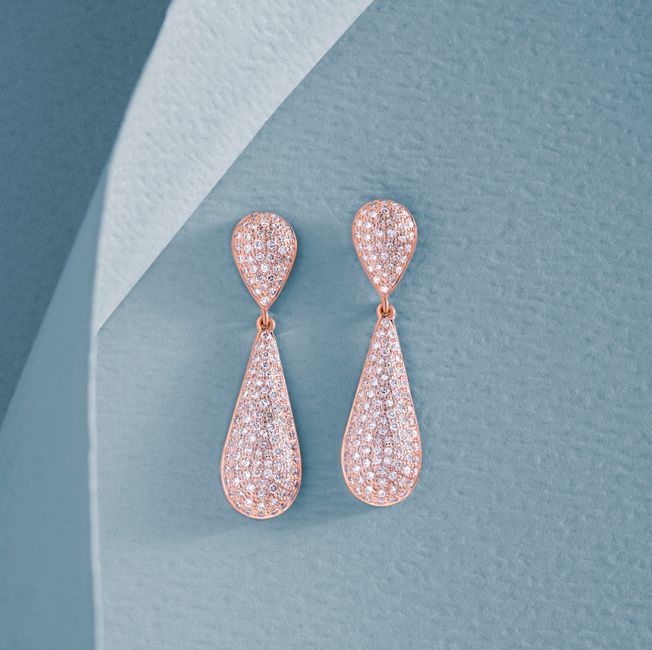
Look closely at the boldest new earrings this season. You might see a simple piece of jewelry, but a trained eye sees the sweeping cantilever of a Zaha Hadid building or the minimalist grid of a Mies van der Rohe facade. The worlds of architecture and jewelry design are colliding, transforming our lobes into showcases for structural art. This isn't mere accessorizing; it's the adoption of a structural philosophy. We are moving beyond simple ornamentation into an era of wearable architecture, where the principles that govern our cityscapes are being miniaturized into personal, portable monuments. In this analysis, we will deconstruct this fascinating trend by examining its three foundational pillars: structural integrity, the deliberate use of negative space, and radical material innovation. Prepare to see your jewelry box as a gallery of miniature maquettes.
We’ve all done it: taken off a pair of stunning 'statement' earrings mid-day, our earlobes aching. But what if true luxury wasn't about weight, but about weightlessness? Discover the 4-gram rule, the jewelry world's secret to crafting new designs that offer all the style and substance you crave, without any of the sacrifice. As a stylist who has handled thousands of pieces, from runway behemoths to whisper-thin heirlooms, I can tell you that the most-worn, most-loved pieces in any collection are never the heaviest. They are the ones that achieve a perfect, almost magical, equilibrium. They are the ones that follow the 4-gram rule.
Anyone can make an entrance, but the real power lies in the exit. We'll show you why the most overlooked piece of jewelry is actually a secret weapon for confidence, designed to captivate attention long after you've walked away. In a world saturated with front-facing perfection for the selfie, the back necklace is a subversive, intelligent choice. It’s a deliberate detail for an audience you may never see again, a final, lingering note in the symphony of your personal brand. This isn't just about accessorizing; it's about authoring your own narrative, right down to the final punctuation mark.
When you picture the garnet, January's birthstone, you likely see a deep, wine-red gem. But this singular image is one of history's greatest deceptions, as the garnet is actually the ultimate chameleon of the gem world, masquerading as everything from fiery orange sapphires to lush green emeralds. For centuries, this mineral family has hidden in plain sight, its members mistaken for more famous counterparts. As a gemologist and historian, I've seen this deception play out in auction houses and antique markets. It’s time to pull back the curtain and reveal the spectacular truth about this underappreciated gem.